Los Pollitos (Dicen)
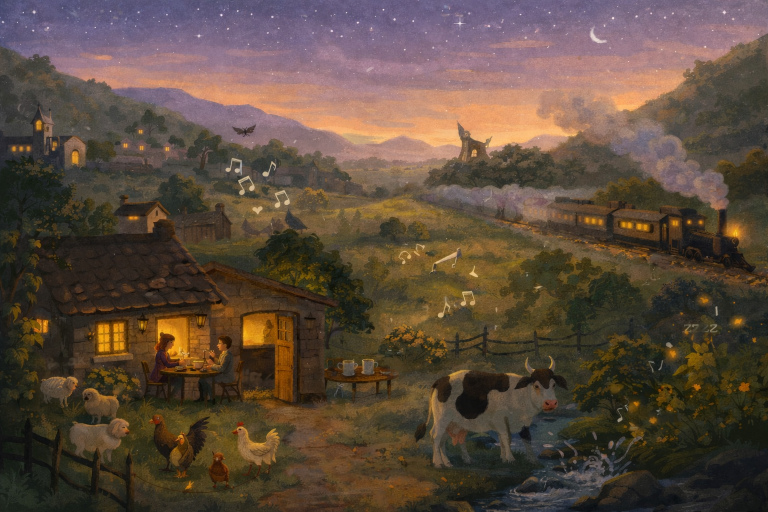
In this episode, you will listen to a traditional Spanish nursery rhyme called Los pollitos (dicen).
The episode focuses on:
- Animals and family relationships
• Basic needs: food, warmth, and rest
• Repetition and rhythm in Spanish - Present tense verbs
• Basic vocabulary (A1 level)
• Understanding meaning through repetition
Before you listen, think about these questions:
- ¿Qué animales conoces en español? Escribe cuatro.
- ¿Qué cosas necesitas cuando tienes frío o hambre? Escribe dos.
If on a phone, scroll right →
| 🧩 Vocabulary from the Nursery Rhyme (A1) — Animals & Family | |||
|---|---|---|---|
| Español | English | Español | English |
| 🐥 los pollitos | little chicks | 🐔 la gallina | hen |
| 🪽 las alas | wings | ||
If on a phone, scroll right →
| 🧩 Vocabulary: Needs & Feelings | |||
|---|---|---|---|
| Español | English | Español | English |
| 🍽️ hambre | hunger | ❄️ frío | cold |
| 🧣 abrigo | warmth / shelter | ||
If on a phone, scroll right →
| 🧩 Vocabulary: Food | |||
|---|---|---|---|
| Español | English | Español | English |
| 🌽 maíz | corn | 🌾 trigo | wheat |
| 🍽️ comida | food | ||
If on a phone, scroll right →
| 🧩 Vocabulary: Verbs (Present) | |||
|---|---|---|---|
| Español | English | Español | English |
| 🗣️ dicen | say | 🔍 busca | looks for |
| 🎁 da | gives | 😴 duermen | sleep |
| 📅 el otro día | next day | ||
If on a phone, scroll right →
| 🔑 Grammar | |
|---|---|
| Español | English |
| 🔑 Enfoque gramatical | 🔑 Grammar focus |
| Las canciones infantiles como herramienta lingüística y cultural | Nursery rhymes as a linguistic and cultural tool |
| Importancia cultural | Cultural importance |
| Las canciones infantiles enseñan vocabulario y gramática básica. | Nursery rhymes teach basic vocabulary and grammar. |
| También forman parte de la memoria cultural de un idioma. | They are also part of a language’s cultural memory. |
| Se aprenden en la infancia y se recuerdan durante toda la vida. | They are learned in childhood and remembered throughout life. |
| Por eso, aparecen con frecuencia en la cultura popular. | For this reason, they frequently appear in popular culture. |
| Uso en cultura popular y humor | Use in popular culture and humour |
| Las canciones infantiles aparecen en películas, canciones y series. | Nursery rhymes appear in films, songs, and TV series. |
| Se usan en chistes, comedia e ironía. | They are used in jokes, comedy, and irony. |
| Funcionan porque casi todo el mundo reconoce la referencia. | They work because almost everyone recognises the reference. |
| Una referencia breve transmite significado rápidamente. | A short reference conveys meaning quickly. |
| Ejemplos interculturales | Cross-cultural examples |
| En español, Los pollitos dicen se asocia con cuidado y protección. | In Spanish, Los pollitos dicen is associated with care and protection. |
| Mencionar “los pollitos” puede expresar ternura o dependencia. | Mentioning “the little chicks” can express tenderness or dependence. |
| En inglés, Humpty Dumpty se usa para hablar de algo frágil. | In English, Humpty Dumpty is used to describe something fragile. |
| “London Bridge is falling down” se usa de forma simbólica. | “London Bridge is falling down” is used symbolically. |
| Beneficios para estudiantes de idiomas | Benefits for language learners |
| Aprender canciones infantiles ayuda a entender referencias culturales reales. | Learning nursery rhymes helps learners understand real cultural references. |
| Mejora la comprensión auditiva gracias al ritmo y la repetición. | It improves listening through rhythm and repetition. |
| Facilita la memorización de estructuras gramaticales. | It makes grammatical structures easier to memorise. |
| Conecta el idioma con emociones y contexto cultural. | It connects language with emotions and cultural context. |
Whoopsydaisies!
This section is members-only. Luckily, there are still plenty of free goodies for you!
Members unlock Tabs 4-7 (Interactive transcript, bilingual transcript, quiz & downloads).
Whoopsydaisies!
This section is members-only. Luckily, there are still plenty of free goodies for you!
Members unlock Tabs 4-7 (Interactive transcript, bilingual transcript, quiz & downloads).
Whoopsydaisies!
This section is members-only. Luckily, there are still plenty of free goodies for you!
Members unlock Tabs 4-7 (Interactive transcript, bilingual transcript, quiz & downloads).
Whoopsydaisies!
This section is members-only. Luckily, there are still plenty of free goodies for you!
Members unlock Tabs 4-7 (Interactive transcript, bilingual transcript, quiz & downloads).
- Narration: Jonathan Chávez
- Story script: Jonathan Chávez
- Music: “The Carnival of the Animals – Fossiles” by Camille Saint-Saëns, trimmed for use. Licensed under Creative Commons Attribution–ShareAlike 2.0 (CC BY-SA 2.0). Source: Wikimedia Commons.
- Sound effects: sourced from Mixkit
- Video production: Rafeal B – shared via Vimeo
- Audio editing: Jonathan Chávez
- Transcription: Jonathan Chávez
- Study guide writer: Gabriel Chávez
- Images: ChatGPT Plus